Fitness training is an important part of maintaining a healthy body and a balanced lifestyle. In today’s busy world, people often spend long hours sitting at desks, using digital devices, and dealing with stressful routines. Regular fitness training can help improve physical strength, mental well-being, energy levels, and overall quality of life.
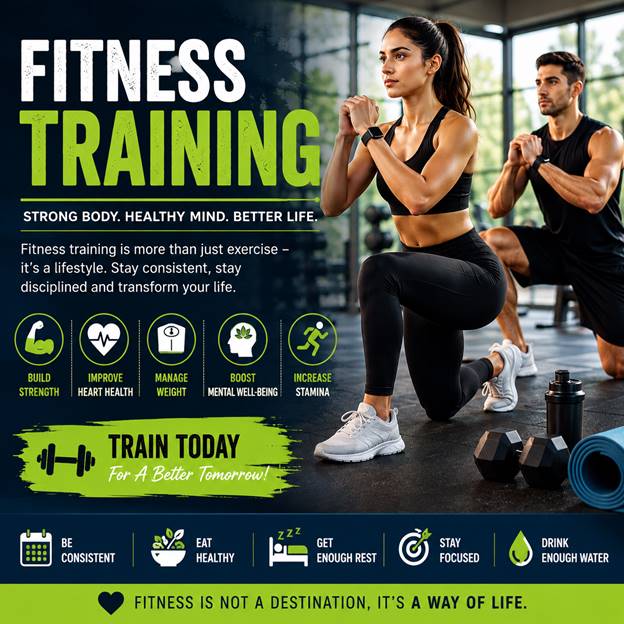
Whether your goal is to lose weight, build muscle, improve endurance, or simply stay active, a well-planned fitness routine can help you achieve sustainable results.
What Is Fitness Training?
Fitness training refers to a structured program of physical activities designed to improve different aspects of physical fitness. It may include strength training, cardiovascular exercises, flexibility workouts, balance exercises, and mobility training.
A fitness program should be adjusted according to an individual’s age, fitness level, goals, and lifestyle. Beginners should start gradually and increase the intensity as their body becomes stronger and more comfortable with exercise.
Benefits of Regular Fitness Training
1. Improves Physical Strength
Strength training exercises such as squats, lunges, push-ups, and resistance exercises help develop stronger muscles. Improved strength makes everyday activities easier and can support better physical performance.
2. Helps With Weight Management
Regular physical activity increases energy expenditure and can support healthy weight management when combined with a balanced diet. Cardio exercises, strength workouts, and active daily habits can all contribute to maintaining a healthy body composition.
3. Supports Heart Health
Cardiovascular activities such as walking, jogging, cycling, swimming, and aerobic workouts can help improve cardiovascular fitness. Regular exercise can also contribute to better stamina and endurance.
4. Increases Energy and Stamina
Although exercise requires physical effort, consistent training can help you feel more energetic throughout the day. Improved endurance can make activities such as walking, climbing stairs, and sports easier.
5. Promotes Mental Well-Being
Fitness training is not only beneficial for the body. Physical activity can support mood, reduce everyday stress, and improve overall mental well-being. A regular workout routine can also provide a sense of achievement and motivation.
Different Types of Fitness Training
A complete fitness program can combine several types of exercise.
Strength Training:
Focuses on developing muscular strength and endurance through bodyweight exercises, resistance bands, free weights, or machines.
Cardiovascular Training:
Includes activities such as running, cycling, swimming, brisk walking, and aerobic workouts to improve endurance.
Flexibility Training:
Stretching and mobility exercises can help maintain a healthy range of motion and support comfortable movement.
Functional Training:
Uses exercises that imitate everyday movements, helping develop strength, coordination, balance, and stability.
High-Intensity Training:
Short periods of challenging exercise combined with recovery periods can provide an efficient workout. However, intensity should be appropriate for your fitness level.
How to Create an Effective Fitness Routine
Creating a fitness routine does not necessarily require spending hours in the gym. Consistency is more important than doing excessive exercise occasionally.
Start by identifying your primary goal. For example, your goal might be improving strength, increasing endurance, managing weight, or becoming more active.
Next, create a realistic weekly schedule. Include a combination of strength training, cardiovascular activity, mobility work, and rest or recovery days.
It is also important to increase workout intensity gradually. Giving your body enough time to adapt can help you maintain consistency and reduce the risk of overtraining.
The Importance of Nutrition and Recovery
Exercise is only one part of a healthy lifestyle. Proper nutrition and recovery are equally important.
A balanced diet containing adequate protein, vegetables, fruits, whole grains, healthy fats, and sufficient fluids can support an active lifestyle. Sleep and rest also allow the body to recover from physical activity.
Avoid focusing only on short-term results. Sustainable fitness is about developing healthy habits that can be maintained for months and years.
Common Fitness Training Mistakes
Many beginners make mistakes that can slow their progress. Common examples include exercising with incorrect technique, increasing workout intensity too quickly, skipping recovery, following unrealistic fitness plans, and focusing only on one type of exercise.
A well-rounded approach is generally more effective. If you are new to exercise or have specific health concerns, consider consulting a qualified fitness professional or healthcare professional before starting a demanding workout program.
Conclusion
Fitness training is a powerful way to build a stronger, more active, and healthier lifestyle. From strength and cardiovascular training to flexibility and functional exercises, there are many ways to create a fitness routine that suits your goals.
The key is consistency. Start with manageable activities, follow proper exercise techniques, maintain a balanced diet, and give your body enough time to recover. With patience and dedication, fitness training can become a valuable part of your everyday life.