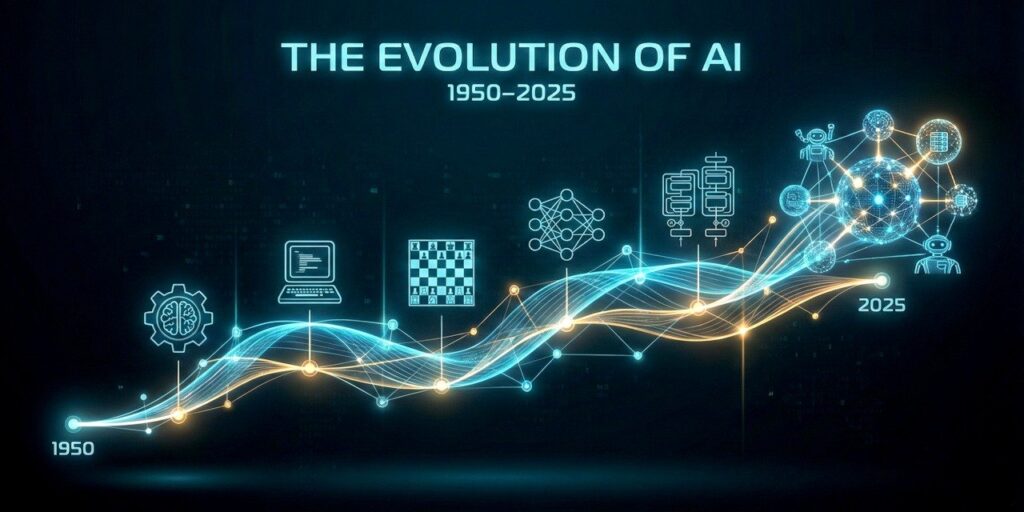
In 2026, technology is not just advancing; it is transforming the foundations of business, society, and everyday life. From intelligent AI systems to stronger cybersecurity, the pace of innovation is speeding up like never before. Organizations that embrace these changes will shape the next decade of success. According to Gartner’s Top Technology Trends for 2026, the evolution of tech is reshaping industries in real-time, making innovation not just an advantage but a necessity.
Let’s explore the top technology trends that are driving this evolution and how they are changing everything from software development to global data trust.
1. AI-Native Development Platforms
The future of software development lies in platforms that think like developers. AI-native development platforms integrate generative AI into the development process. These tools enable both technical and non-technical teams to build applications faster and more efficiently than ever, lowering barriers to innovation and allowing businesses to create custom solutions at an unprecedented scale. Gartner predicts that by 2030, 80% of organizations will shift from large traditional development teams to smaller, AI-supported teams.
In simple terms, imagine an AI assistant that not only writes code but also tests, integrates, and helps deploy it while your team focuses on strategy and user experience.
2. AI Supercomputing Platforms
AI supercomputing combines powerful hardware and advanced software to handle vast workloads, from complex simulations to training large data models. These platforms use CPUs, GPUs, AI-specific chips, and innovative computing methods like neuromorphic processors to break performance boundaries. Gartner notes that by 2028, over 40% of leading businesses will adopt hybrid computing systems that mix traditional and AI-optimized technologies.
This is not just about faster processing; it opens doors to real-world breakthroughs, from drug discovery in biotech to climate simulations that address global challenges.
3. Multiagent Systems (MAS)
In a world of complex digital workflows, a single AI agent is no longer enough. Multiagent systems introduce groups of intelligent agents that work together to solve problems and automate business processes. Consider them as teams of digital assistants, each with specific skills, collaborating effortlessly across tasks. This approach enables companies to expand automation, personalize services, and connect different departments, boosting both speed and efficiency.
MAS turns a single robot assistant into an entire intelligent workforce—coordinated, specialized, and adaptable.
4. Domain-Specific Language Models (DSLMs)
General AI models like ChatGPT are impressive, but they do not always excel in specialized areas. Domain-specific language models are custom-trained for particular industries like healthcare, finance, or law, providing better accuracy, relevance, and compliance. Gartner predicts that by 2028, more than half of enterprise AI models will be domain-specific, showing how essential context has become in AI adoption.
These specialized AI models help companies make smarter decisions more quickly without compromising industry standards or governance.
5. Confidential Computing
As data flows across clouds, regions, and partners, securing that data while in use is critical. Confidential computing protects sensitive workloads within secure hardware environments, making information inaccessible even to cloud providers. For industries like finance, healthcare, and government, this means stronger compliance and reduced risk. Gartner forecasts that by 2029, over 75% of workloads in untrusted environments will rely on confidential computing.
In an age of rising privacy concerns, this technology is crucial for building trust.
6. Physical AI: Bridging Digital and Real Worlds
AI is no longer limited to screens. Physical AI operates real-world machines, from drones and self-driving vehicles to smart warehouse robots. These systems sense, decide, and act in changing environments, creating a new wave of automation in industries such as logistics, construction, and manufacturing.
For example, picture a fleet of AI-managed drones optimizing inventory or robots adjusting production lines in real-time—this is Physical AI at work.
7. Preemptive Cybersecurity
Cyber threats are evolving faster than defenses. Preemptive cybersecurity uses advanced analytics and AI to predict and neutralize threats before they occur. Instead of just responding to attacks, systems learn risk patterns and act proactively, a shift Gartner predicts will dominate security investments by 2030.
This change turns cybersecurity into a strategic shield—anticipating attacks rather than merely reacting to them.
8. Digital Provenance and Trust
With AI generating more content and using third-party software in every stack, verifying the origin and integrity of digital assets is essential. Digital provenance tools, including software bills of materials and traceable metadata, ensure transparency in your tech ecosystem. This trend strengthens trust, reliability, and security across digital supply chains.
It’s like having a digital “chain of custody” for all the data and code that support your business.
9. AI Security Platforms
AI brings efficiency but also risk. AI security platforms offer centralized control over AI applications, enforcing policies, detecting unusual activities, and preventing misuse like prompt injection or model exploits. These platforms are becoming essential as AI spreads across enterprise systems. Gartner expects that over 50% of enterprises will adopt them in the near future.
AI tools need AI protectors—and these platforms fit that role perfectly.
10. Geopatriation
In a connected world, data and tech independence have turned into geopolitical matters. Geopatriation involves strategies where organizations align their digital presence with regional laws, national policies, and strategic needs—especially in areas where data residency rules differ. While not always in the spotlight, this trend highlights the increasing complexity of global tech governance.
Creator : RACHIT GOEL