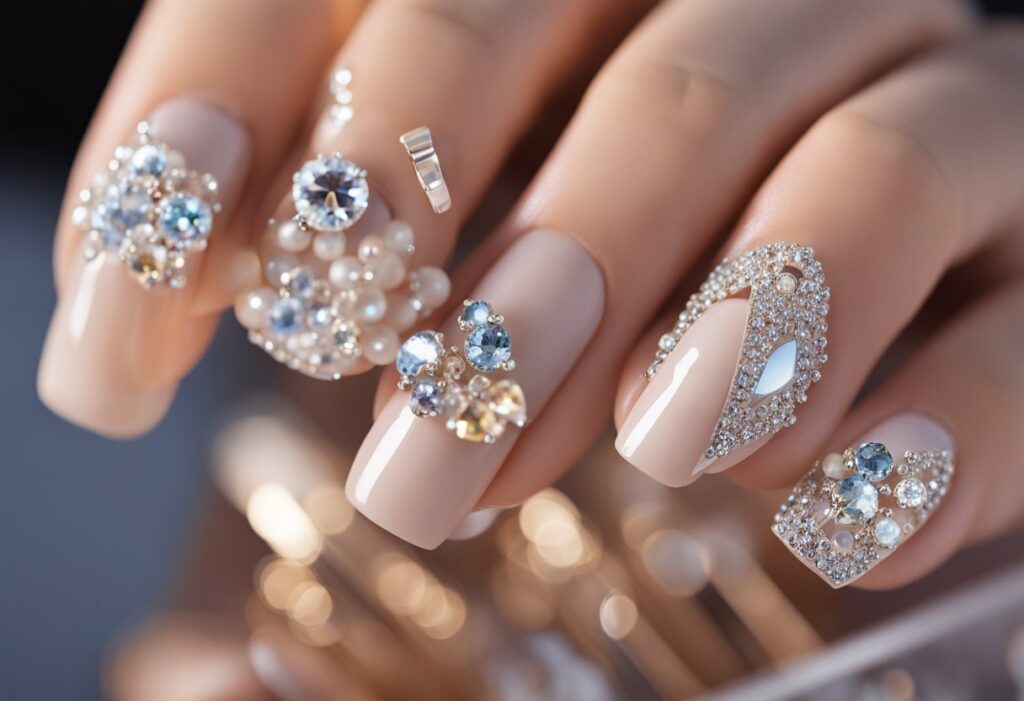
Nail Extension is the most used nail technique to create strong, resistant nails with a longlasting finish. There are different types of Nail Extension Course, which differ from one another on the basis of the methods used and in relation to the type of material during working: Nails in Gel, in Acrylic and in Fiber Glass.
Short Brief On Nail Extension Course
A nail art technician is a specialist in the beauty of the nails of the hands and the feet. The nail artist masters different techniques:- On a short, bitten, or broken nail, she performs an extension; the Nail art expert puts false nails, called “capsules,” on natural nails.
- The nail artist then performs modelling of the nails, either with resin, very resistant and hardens in the open air, or with gel, more natural, which dries under a UV lamp.
- At the client’s request, the Nail art specialists beautify the nails. The techniques are varied. The nail technician must also know how to perform French manicures, colour gradients, apply rhinestones on the nail or draw patterns (nail art).
- After three to four weeks, the nail having grown back, empty space appears at the base of the nail. The nail artist, therefore, performs a filling. First, she maintains the nails, cuts them, and files them; then, she ironed a layer of gel to hide the space.
- Products applied to nails cannot be removed with nail polish remover. If the client wishes to remove her manicure, she must therefore return to the salon, where the nail technician files the gel or soaks the nails in a solution to remove the resin.
- She must be careful not to damage the natural nails and respect scrupulous hygiene to avoid infections. She should also identify and report any toenails that are suffering from yeast infection in order to avoid passing them on to subsequent clients. She must regularly change files, sterilize her instruments, and clean her worktable .
- On a short, bitten, or broken nail, she performs an extension; the Nail art expert puts false nails, called “capsules,” on natural nails.
- The nail artist then performs modelling of the nails, either with resin, very resistant and hardens in the open air, or with gel, more natural, which dries under a UV lamp.
- At the client’s request, the Nail art specialists beautify the nails. The techniques are varied. The nail technician must also know how to perform French manicures, colour gradients, apply rhinestones on the nail or draw patterns (nail art).
- After three to four weeks, the nail having grown back, empty space appears at the base of the nail. The nail artist, therefore, performs a filling. First, she maintains the nails, cuts them, and files them; then, she ironed a layer of gel to hide the space.
- Products applied to nails cannot be removed with nail polish remover. If the client wishes to remove her manicure, she must therefore return to the salon, where the nail technician files the gel or soaks the nails in a solution to remove the resin.
- She must be careful not to damage the natural nails and respect scrupulous hygiene to avoid infections. She should also identify and report any toenails that are suffering from yeast infection in order to avoid passing them on to subsequent clients. She must regularly change files, sterilize her instruments, and clean her worktable .